
How to Apply Sunscreen the Right Way: SPF 50+, PA++++ and the Two-Finger Rule
Sunscreen is an essential part of everyday sun protection, but applying too little can leave you with less protection than the label suggests. Here is how to make this morning step work harder for your skin.
The essentials: Apply generously, cover often-missed areas, and reapply regularly outdoors. Pair sunscreen with shade, protective clothing and a hat.
SPF 50+ and PA++++: what the label means
Sunlight contains two types of ultraviolet rays that can harm your skin:
- UVB: Primarily associated with sunburn. SPF indicates protection against UVB under test conditions. SPF 50+ indicates high protection, but no sunscreen blocks every UV ray.
- UVA: Contributes to premature skin ageing and pigmentation. The PA rating describes UVA protection. PA++++ is the highest grade in the PA system and indicates a UVA protection factor of at least 16.
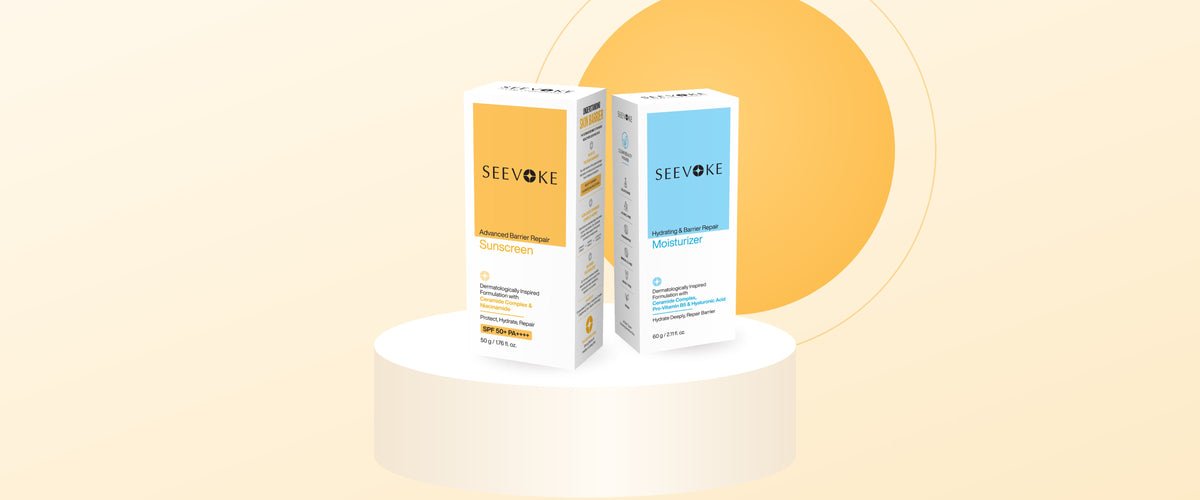
The Seevoke Advanced Barrier Repair Sunscreen SPF 50+ PA++++ is a broad-spectrum sunscreen designed to help protect against both UVA and UVB.
How much sunscreen should you use?
SPF testing uses 2 mg of sunscreen per square centimetre of skin. Applying a thinner layer can give substantially less protection than the labelled SPF.
The two-finger rule
Squeeze two full lines of sunscreen along your index and middle fingers as a practical guide for your face and neck. This is an approximation: the amount you need varies with finger length, the product's nozzle and the area you cover. Follow the directions on your sunscreen label and use enough to cover skin generously and evenly.
How to apply sunscreen, step by step
- Start with your skincare. Cleanse, then apply your serum and moisturizer. Sunscreen is the final skincare step in your morning routine, before makeup.
- Let your moisturizer settle. Give it a moment to absorb before applying sunscreen.
- Apply evenly. Dot sunscreen over your forehead, cheeks, nose, chin and neck, then gently spread it into an even layer.
- Cover the easy-to-miss spots. Include your ears, hairline, sides of your neck and the backs of your hands. Use additional sunscreen for exposed areas beyond your face and neck.
- Apply before going outside. Aim for 15 minutes before sun exposure, or follow the timing on the product label.
Seevoke Sunscreen is designed with a lightweight, non-greasy texture for comfortable daily wear.
When should you reapply?
Reapply sunscreen at least every two hours while outdoors, and after swimming, sweating or towel-drying, following the product label. Do not assume your sunscreen is water-resistant unless its label says so.
Driving or spending long periods beside a sunny window? UVA can pass through ordinary window glass, so consider your exposure and maintain protection. A morning application should not be treated as all-day coverage.
In hot or humid weather: Keep sunscreen handy, seek shade and pay attention to sweat and towel-drying. A higher SPF does not mean you can skip reapplication.
Common sunscreen mistakes
- Skipping cloudy days. UV exposure can still occur when the sky is overcast.
- Ignoring window-side exposure. Glass does not necessarily block UVA.
- Relying only on makeup SPF. Makeup is often applied more thinly than the amount used for SPF testing. Wear sunscreen underneath.
- Using too little. Use the two-finger rule as a starting guide, then ensure generous, even coverage.
- Forgetting to reapply. Sunscreen needs refreshing during outdoor exposure, especially after water, sweat or towel-drying.
Why sunscreen matters for your skin barrier
UV exposure can contribute to dryness and barrier stress. Seevoke Sunscreen pairs its UV filters with Ceramide Complex and Niacinamide to combine sun protection with skin care.
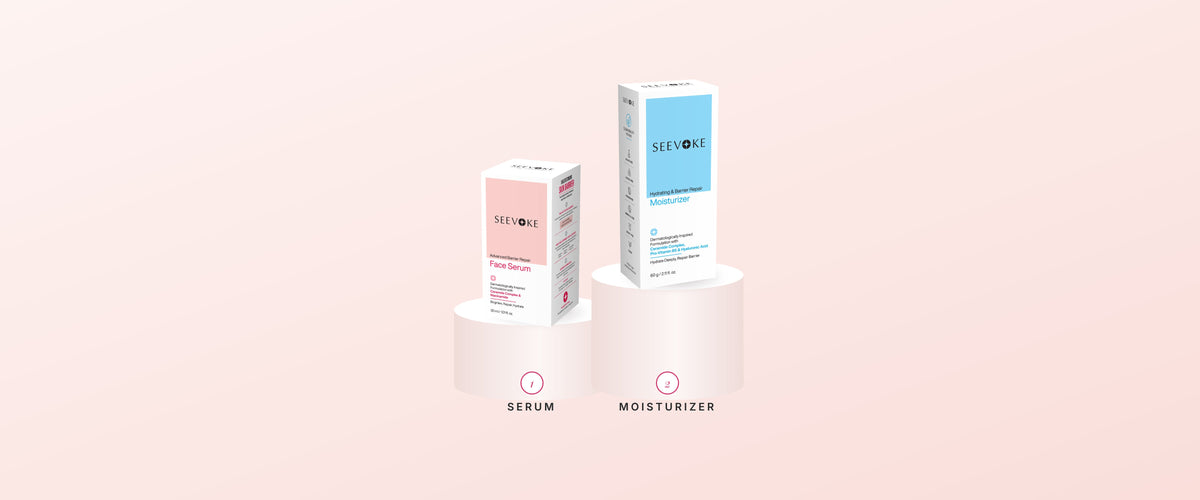
For added hydration, apply the Seevoke Hydrating & Barrier Repair Moisturizer underneath, allowing it to settle before sunscreen.
Frequently asked questions
Do I need sunscreen if I stay indoors?
If you spend time near sunny windows or go outdoors, sunscreen can help protect exposed skin. Your needs depend on your UV exposure, including how close you sit to windows and how long you spend there.
Is SPF 50+ suitable for oily skin?
SPF describes UVB protection, not how heavy a formula feels. For oily skin, look for a lightweight texture you are comfortable applying generously, such as Seevoke's non-greasy formula. Adjust your moisturizer to your skin's needs.
Can I use it on sensitive skin?
Seevoke Sunscreen is formulated for all skin types, including sensitive skin, but individual reactions can occur. Patch test first, avoid contact with the eyes and stop use if irritation develops.
Step out protected
Make daily sun protection part of your routine with Seevoke Advanced Barrier Repair Sunscreen SPF 50+ PA++++.
This article provides general skincare information and is not a substitute for personalized medical advice. Always follow the directions on your product label.